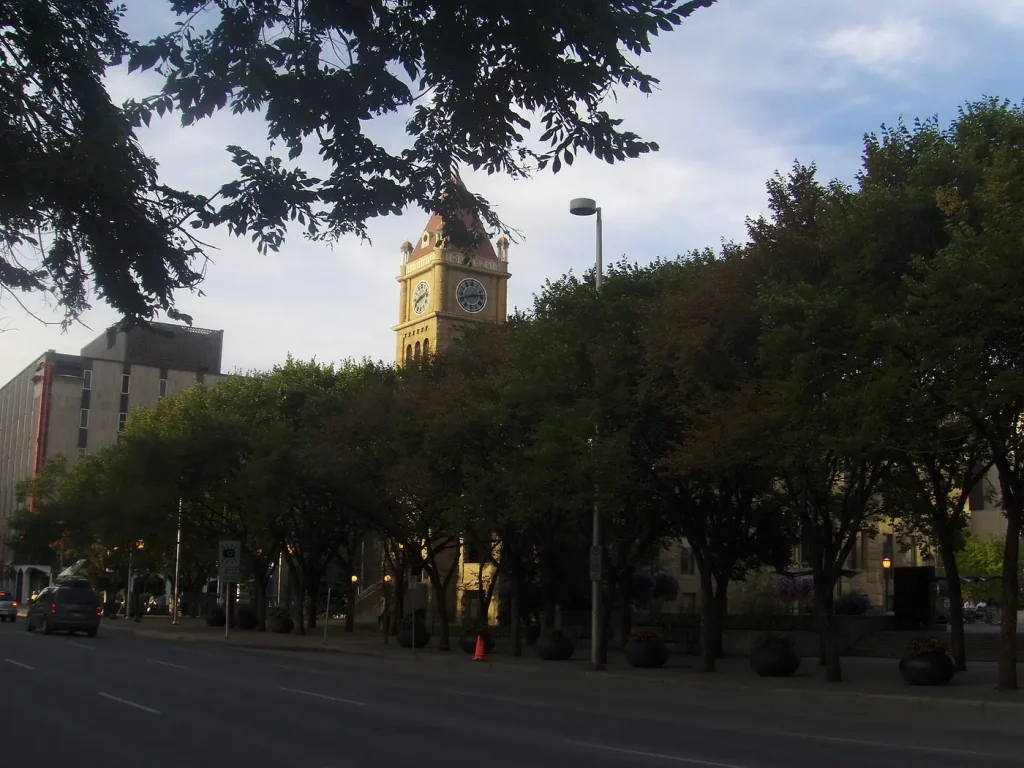
On Monday, March 23, 2026, Calgary City Council opened a public hearing on a proposed amendment to Land Use Bylaw 1P2007 that would repeal citywide residential rezoning, often called “blanket rezoning,” and restore the previous low-density residential districts (Bylaw 9P2026).
How we got here
- May 2024: Council approved citywide rezoning, which took effect on August 6, 2024 and allowed more multi-unit homes, such as rowhouses or fourplexes, on lots that had been zoned only for single-family homes.
- December 15, 2025: Council started the process to consider repealing it.
- February 2026: the City published an interactive map and began mailing letters to low-density property owners.
A very busy hearing
By the morning of March 20, the City Clerk’s Office had received 339 speaker requests and 69 panels of speakers, and 2,390 written submissions totalling 6,804 pages. Because of the volume, the City said the hearing would run over multiple days.
What it could mean for you
If the repeal passes, most properties rezoned in 2024 would go back to their earlier district, such as R-C1 or R-C2, unless the owner already has an approved or submitted application under the new zones. Until a final decision, current rules stay in place. If you are buying a lot for an infill project, check the City’s proposed land use map and talk to us before you commit.
How the hearing works
Speakers are grouped into panels. Each member of the public has up to five minutes, and once a panel finishes, each member of Council has up to seven minutes to ask questions. People can speak in person or by phone if they pre-register, translation can be requested at registration, and anyone can still register in person in the Municipal Building atrium until the hearing ends. Written submissions are distributed to Council. The meeting is livestreamed at calgary.ca/watchlive.
The building context
Housing starts in the City of Calgary by type, 2024 and 2025
The hearing comes after two record years of construction. According to CMHC figures in the City’s Housing Review, Calgary recorded 23,360 housing starts in 2025, up 15.9% from 20,165 in 2024, and led all Canadian municipalities for the second year in a row. Apartments drove the growth, and rental units made up 40% of all starts, the highest share on record. Rowhouse starts increased, while single and semi-detached starts declined modestly.
Building permit data tell a similar story. The City reports that duplex permits fell 20% in 2025 to about 1,600 units, while townhouse permits were little changed at about 3,000 units. The review does not link these figures to rezoning, so read them as context rather than a verdict on the policy.
The new supply is already changing the rental market. The City notes that Calgary’s vacancy rate improved to 5% in 2025, up from 1.4% in 2023, alongside slower population growth. At the end of 2025, 23,467 homes were under construction, 16.1% more than a year earlier, most of them apartments.
What owners and buyers should do now
- Planning to build a suite, duplex or rowhouse: talk to a designer or builder now about whether an application can be submitted before a decision, since the proposal exempts some properties with applications in place.
- Buying a lot or an older home for redevelopment: make your offer conditional on confirming zoning and what can be built, and do not pay a premium for density that may disappear.
- Selling a home with redevelopment potential: be clear about the current zoning and the proposed change, so buyers are not surprised later.
- Neighbours: check the City’s interactive map to see how your street would be affected, and follow the hearing online if you cannot attend in person.
Sources:
- City of Calgary Newsroom: Details about the upcoming 2026 March 23 Public Hearing (Mar. 20, 2026)
- City of Calgary: Repeal of Citywide Rezoning (project page and timeline)
- City of Calgary Newsroom: City Council approves citywide rezoning with amendments in response to Calgary’s housing crisis (May 14, 2024)
- City of Calgary Corporate Economics: Housing Review, Fourth Quarter 2025 (Feb. 2, 2026, PDF)