The City of Calgary’s Corporate Economics team published its Housing Review for the fourth quarter of 2025 on February 2, 2026. It puts the resale numbers in context: demand cooled just as a wave of new homes arrived.
Calgary Economic Region: annual population growth
Demand: growth slows
- The Calgary Economic Region grew by 52,839 people, or 2.8%, between July 2024 and July 2025, down from 5.9% (106,483 people) a year earlier.
- Growth in non-permanent residents fell by 80%, and net interprovincial migration almost halved to 11,124, though it is still more than twice the ten-year average of about 4,000.
- Employment in the region grew 3.7% (37,200 jobs) in 2025.
Supply: record building
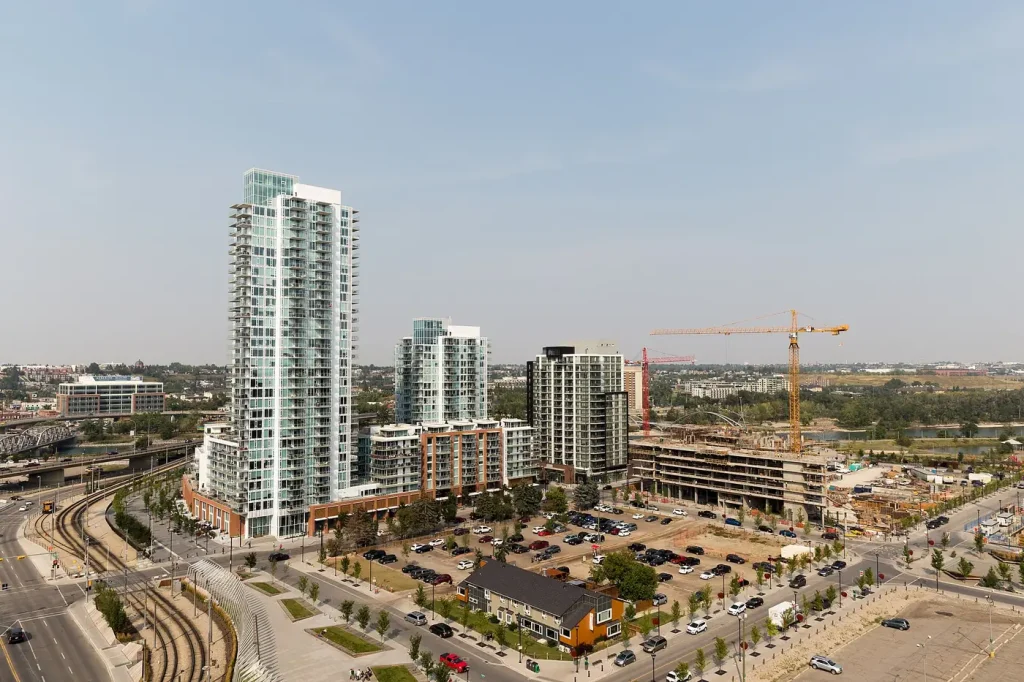
- The city recorded 23,360 housing starts in 2025, a second consecutive record, and 20,414 completions, the second highest on record.
- At the end of 2025, 23,467 homes were under construction, 73.3% of them apartments.
- Rental units were 40% of all starts, the highest share on record.
Rents and prices
With so much new rental supply, the City reports that the rental vacancy rate rose to 5% in 2025, from 1.4% in 2023. The average five-year conventional mortgage rate fell to 6.2% from 6.7% in 2024, while Calgary’s mortgage delinquency rate stayed stable at 0.16%.
Our take: higher vacancy gives renters more choice and slows the move from renting to buying, which is one reason condo resale prices have been soft.
Affordability: better, but far from 2020
Calgary housing price-to-income ratio
The City’s housing price-to-income ratio fell to 5.1 in the third quarter of 2025, from 5.5 in the second quarter and 5.7 a year earlier, as prices eased while wages kept growing. That is a short-term improvement, but the ratio was 3.9 in early 2020 and averaged about 3.8 between 2015 and 2020, which shows how much affordability has worsened since the pandemic.
Jobs and incomes
Employment in the Calgary Economic Region grew 3.7% in 2025, well ahead of Canada’s 1.5% but slower than 4.8% in 2024. Labour income growth eased to 2.8% from 5.2%. The City notes that cooling hiring intentions keep youth unemployment elevated, which limits how many young people can enter the housing market. Despite the slowdown, the region had the largest population growth of any economic region in absolute terms and the second-highest growth rate, behind Edmonton.
Resale market in 2025
Resale sales in the city fell to 22,751 in 2025, 4,224 fewer than in 2024, with declines of 28% for apartments and 17% for row homes. Inventory reached its highest level since the pandemic. The average resale price still rose by $21,685 to $628,725, and sales of homes over $1 million increased across all property types. Detached and semi-detached homes in the City Centre and West remained the most sought after.
Building: starts and completions
Housing completions reached 20,414 units in 2025, slightly below 21,084 in 2024 but still the second highest on record, and 2025 was the first year Calgary led all Canadian municipalities in both starts and completions. Single-detached and semi-detached homes under construction both fell by 16%, which the City says suggests slower new supply of these types in the coming year, while unabsorbed new inventory rose to 755 units from 465 a year earlier.
Mortgages
The Bank of Canada cut its policy rate by 0.75 percentage points in 2025, from 3.0% to 2.25%. While delinquencies rose nationally as pandemic-era mortgages renewed, especially in Ontario and British Columbia, Calgary’s rate stayed stable.
What it means
- Renters: high vacancy means more choice and room to negotiate.
- First-time buyers: affordability has improved from 2024, and condo and row prices have adjusted the most, but budget carefully.
- Sellers of detached homes in central and western districts: demand remains solid.
- Investors: with record rental construction, plan for more competition for tenants and longer vacancies than in 2023.