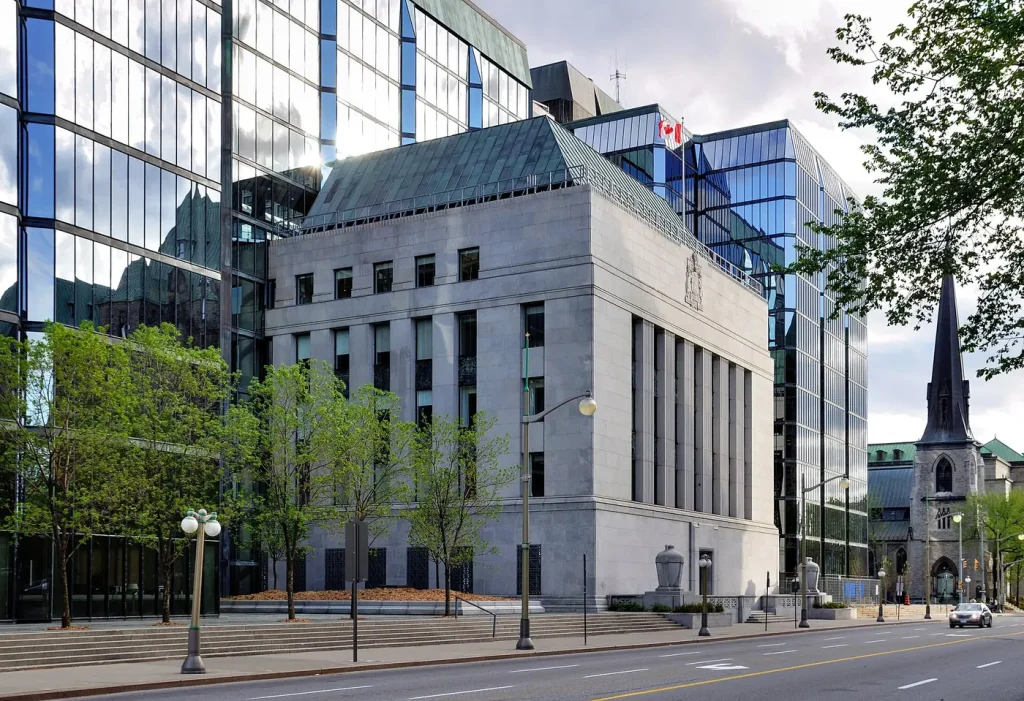
On December 11, 2024, the Bank of Canada cut its target for the overnight rate by 0.50 percentage points to 3.25%, with the Bank Rate at 3.5% and the deposit rate at 3.25%. It was the fifth cut of 2024 and the second half-point move in a row.
Bank of Canada policy rate, %
What the Bank said
- The economy grew 1% in the third quarter, below the October forecast, and the fourth quarter also looks weaker.
- Consumer spending and housing activity both picked up, suggesting lower interest rates are beginning to boost demand.
- Lower immigration targets mean GDP growth next year will likely be below the October forecast.
- Possible new US tariffs on Canadian exports have increased uncertainty.
- CPI inflation has been about 2% since the summer.
What it means for Calgary
The policy rate ends 2024 at 3.25%, 1.75 points below the 5% it held until June. With Calgary inventory well above last year and new mortgage rules in effect from December 15, buyers enter 2025 with better borrowing costs and more choice. The first decision of 2025 is on January 29.
Compared with October
On October 23, the Bank cut the rate by 0.50 points to 3.75%. The December cut took it to 3.25%, so the policy rate fell by a full percentage point in seven weeks. The Bank said it had reduced the policy rate substantially since June and that, going forward, it would evaluate the need for further reductions “one decision at a time.”
Why the Bank cut
The Bank said that with inflation around 2%, the economy in excess supply and recent indicators pointing to softer growth than projected, a further 50 basis point cut was needed to support growth and keep inflation close to the middle of the 1–3% target range. The unemployment rate rose to 6.8% in November, as employment grew more slowly than the labour force. The Bank also noted that federal and provincial measures, including the temporary GST break and changes to mortgage rules, will affect demand and inflation.
What it means for Calgary buyers
Lower rates help buyers with variable-rate mortgages first, since their payments follow the prime rate. Fixed rates follow bond yields more closely, so they do not move one-for-one with the Bank’s decisions. From December 15, federal rules raise the price cap for insured mortgages from $1 million to $1.5 million and open 30-year amortizations to all first-time buyers and to buyers of new builds. In Calgary, where the November benchmark price was $587,900, these changes widen the options for buyers with less than 20% down.
What it means for sellers
Calgary had 4,352 homes for sale in November, compared with 3,000 a year earlier. Lower borrowing costs can bring more buyers into the market in 2025, but sellers will also compete with more listings than last year. Pricing based on recent sales of the same property type in the same district remains the safest approach.
Local angle
The Bank said the possibility of new US tariffs on Canadian exports has increased uncertainty and clouded the outlook. For Calgary households, uncertainty can matter as much as the rate itself: buyers who are unsure about their jobs may wait, even when borrowing costs fall.
Practical takeaways
Buyers with a pre-approval from earlier in the year should ask their lender to update it, since lower rates can change the amount they qualify for. Compare fixed and variable options with the same lender. Mark January 29, 2025, the date of the next decision, since it will shape borrowing costs heading into spring.
The Bank expects CPI inflation to average close to the 2% target over the next couple of years, although the GST holiday will lower it temporarily.
Sources:
- Bank of Canada: Bank of Canada reduces policy rate by 50 basis points (December 11, 2024)
- Bank of Canada: policy interest rate history
- Department of Finance Canada: mortgage reforms effective December 15, 2024 (September 16, 2024)
- Bank of Canada: rate announcement (Oct. 23, 2024)
- CREB®: Supply on the rise, but not across all price ranges (Dec. 2, 2024)